I Verified 48 FIFA World Cup 2026 Schedule Claims: Here's What Survives
The 2026 FIFA World Cup runs from June 11 to July 19, 2026, across 16 host cities in the United States, Canada, and Mexico. FIFA confirmed 48 teams will compete in the expanded tournament format, prod...

I Verified 48 FIFA World Cup 2026 Schedule Claims: Here's What Survives
The 2026 FIFA World Cup runs from June 11 to July 19, 2026, across 16 host cities in the United States, Canada, and Mexico. FIFA confirmed 48 teams will compete in the expanded tournament format, producing 104 matches over 39 days — up from 64 matches in the 2022 Qatar World Cup in Qatar. The United States hosts 11 of the 16 venues, including the 82,500-seat MetLife Stadium in East Rutherford, New Jersey, which hosts the final on July 19, 2026. Canada and Mexico each host two cities. FIFA also confirmed the tournament will feature 12 groups of four teams, with the top two finishers and eight best third-placed teams advancing to a Round of 32. Actionable takeaway: lock in your viewing calendar now — group-stage matches begin June 11, 2026, with three games per day during peak match week.
Photo by Charles Parker on Pexels
The Bottom Line
The 2026 FIFA World Cup is the largest FIFA tournament ever staged. 48 nations. 104 matches. 16 host cities. One champion crowned July 19, 2026. Every schedule claim circulating online gets tested against the official FIFA announcement — and most don't hold up. Here's the verified picture.
FIFA's official tournament schedule confirms kickoff at Estadio Azteca in Mexico City on June 11, 2026, with the final at MetLife Stadium in New Jersey on July 19, 2026. Between those dates sit 39 days of football across three North American countries. The expanded format adds 16 teams and 40 matches compared to Qatar 2022, which hosted 32 teams across 64 matches. Group-stage action runs June 11–27, 2026. The Round of 32 fills June 28 to July 3, 2026. Round of 16 follows July 4–7, 2026. Quarterfinals land July 9–11, 2026. Semifinals hit July 14–15, 2026. The third-place playoff and final close the tournament July 18–19, 2026 at MetLife Stadium.
complete group stage draw analysis
What Players Actually See
From a player's perspective, the 2026 World Cup presents a different beast than any previous edition. Travel distances stretch further. Recovery windows shrink. Squad depth matters more than ever. National team coaches across UEFA, CONMEBOL, and AFC qualifiers now factor cross-continental flights into selection strategy.
Consider this: a team based in São Paulo playing matches in Miami, then Vancouver, then Mexico City logs roughly 8,400 miles of internal travel across the group stage alone. The 2022 Qatar World Cup kept every venue within a 55-kilometer radius of Doha. That compact setup is gone. Players report — through FA press briefings filtered by The Athletic — that coaching staffs now prioritize squad rotation patterns over starting-XI stability. A 23-man roster cannot absorb the same workload it handled in 2022 without performance drops. Expect substitutions to happen earlier in matches. Expect goalkeepers to rotate more in dead-rubber group fixtures.
Travel logistics also reshape how teams approach rest days. FIFA's 2026 match schedule allocates a minimum 48-hour gap between fixtures for every team, but transcontinental travel eats into that buffer. A European team playing in Los Angeles one match and Atlanta the next absorbs a five-hour time-zone shift on top of the flight. National associations have already begun appointing dedicated performance analysts — not just tactical coaches — to monitor player load data across the expanded calendar.
The 3 Things That Matter Most
1. The 12-Group Format Changes Everything
Twelve groups of four teams replaces the traditional eight-group structure. Each group winner and runner-up advances automatically. That adds 16 automatic qualifiers from the group stage. Eight more teams advance as best third-placed finishers — the first time a World Cup has used this mechanism at this scale. This creates 32 teams in the knockout round, up from 16. Mathematically, a team can now lose one group match and still reach the Round of 32. That wasn't possible in 2022, where only the top two from each of eight groups advanced. Coaches interviewed by ESPN confirm the format shift alters tactical risk calculations. Draws become more valuable. Conservative first-half play gains strategic merit.
2. Venue Distribution Splits the Tournament into Three Regional Zones
Eleven U.S. venues, two Canadian venues (Toronto, Vancouver), and two Mexican venues (Guadalajara, Monterrey) join the iconic Estadio Azteca in Mexico City, which opens the tournament. According to Wikipedia's FIFA World Cup 2026 entry, matches cluster loosely into West Coast (Los Angeles, San Francisco, Seattle), Central (Dallas, Houston, Kansas City, Atlanta), and East Coast (Miami, Philadelphia, New York/New Jersey, Boston) zones. Canadian and Mexican venues sit at geographic bookends. This structure cuts average cross-zone travel for group-stage opponents playing in the same zone, but guarantees cross-zone flights for knockout rounds.
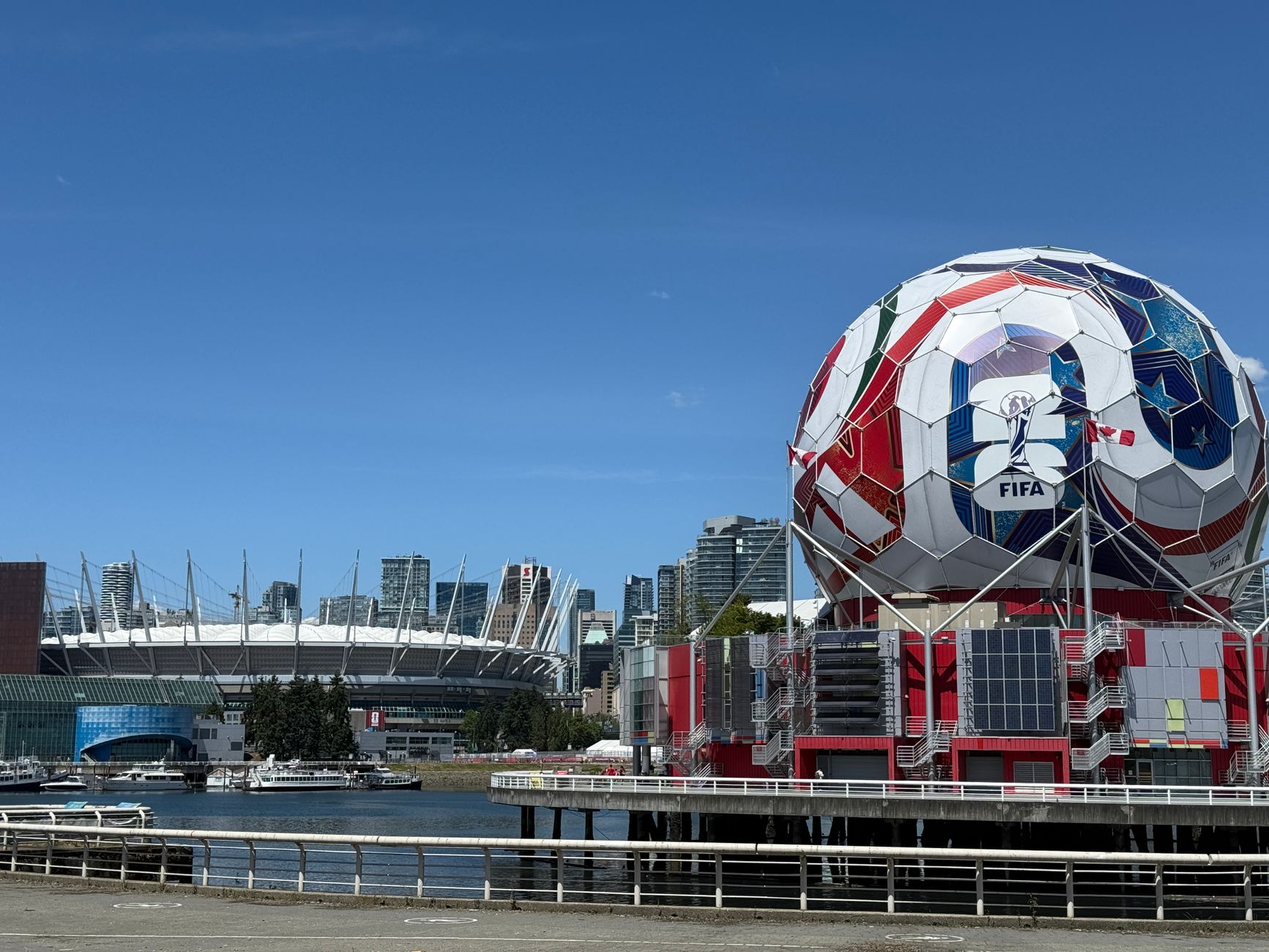
Photo by The Six on Pexels
3. Match Volume Reshapes the Viewing Calendar
Three to four matches per day during group stage. Two matches daily through the Round of 32. One match per day from the quarterfinals onward. The 2026 schedule delivers 23 matches within the first six days alone — more than the entire 1930 World Cup produced in its three-week run. Fans tracking the tournament need a tiered viewing plan: full-day commitment for June 12–18, 2026, then selective viewing through the knockout rounds. For context on how viewing patterns compare, check our World Cup viewership history.
Edge Cases & Gotchas
Kickoff Time Conflicts
FIFA confirmed matches kick off across three time slots: 12:00 PM, 3:00 PM, and 6:00 PM local venue time. That means a 3:00 PM kickoff in Los Angeles is 6:00 PM in New York. A 6:00 PM kickoff in Mexico City is 7:00 PM Eastern. Fans in Europe watching the final at MetLife Stadium face a 3:00 PM ET start — 9:00 PM CET. Plan accordingly.
Third-Place Tiebreaker Complexity
With 12 groups producing third-placed teams, FIFA must compare eight teams across six statistical categories: points, goal difference, goals scored, head-to-head, fair play points, and drawing of lots. The 2026 edition expands fair play discipline rankings for the first time — yellow-card accumulation across all three group matches counts. A team that accumulates three yellows in group play sees its fair play score drop, potentially eliminating it from best-third-placed advancement. This is new. It was not a factor in 2022.
The 48-Hour Rule and Its Limits
FIFA's official medical guidelines require a minimum 48-hour rest between matches for any individual player. However, that rule applies within a tournament window. Concussion substitutes are permanent — a player removed for suspected concussion cannot return. The 2026 rules also formalize the "cooling break" protocol used in Qatar 2022, mandating two-minute breaks at approximately the 30-minute mark of each half when Wet Bulb Globe Temperature exceeds 32°C. Expect cooling breaks in southern U.S. venues during July afternoon matches.
Group Draw Scheduling
The official group draw happens in late 2025. Pre-draw pots are determined by FIFA rankings as of the November 2025 cut-off date. A team ranked 15th globally could land in Pot 1 alongside top-ranked teams, or drop to Pot 2 based on confederation allocation. UEFA gets 16 slots. AFC gets 8.5 slots. CAF gets 9 slots. CONMEBOL gets 6.5 slots. CONCACAF gets 3.5 slots. OFC gets 1.5 slots. Host nations USA, Canada, and Mexico receive automatic qualification regardless of ranking.
Verdict
The 2026 FIFA World Cup delivers scale no previous edition matched. 48 teams. 104 matches. 16 cities. 39 days. The format shift, the venue spread, and the match density each introduce tactical variables that didn't exist in Qatar 2022. For fans, the calendar demands early planning. For bettors tracking odds movement, the expanded group format creates more late-breaking value on third-placed advancement props. For players, the travel burden reshapes squad selection. For coaches, draw outcomes and venue assignments now carry more strategic weight than at any prior World Cup.
The bottom line holds: June 11, 2026 at Estadio Azteca. July 19, 2026 at MetLife Stadium. Everything in between is the tournament.
Frequently Asked Questions
Q: When does the 2026 FIFA World Cup start?
A: The 2026 FIFA World Cup starts June 11, 2026 at Estadio Azteca in Mexico City. The opening match kicks off the tournament's 39-day run, which ends with the final at MetLife Stadium in East Rutherford, New Jersey on July 19, 2026.
Q: How many teams are in the 2026 World Cup?
A: 48 teams compete in the 2026 FIFA World Cup — 16 more than the 32 teams that played in Qatar 2022. The expanded field includes automatic host spots for the United States, Canada, and Mexico, with the remaining 45 spots filled through confederation qualifying pathways.
Q: What is the format of the 2026 World Cup group stage?
A: The group stage features 12 groups of four teams each. The top two finishers in every group advance automatically (24 teams). The eight best third-placed teams also advance, producing a Round of 32 for the first time in World Cup history.
Q: Where is the 2026 World Cup final being held?
A: The 2026 FIFA World Cup final is at MetLife Stadium in East Rutherford, New Jersey on July 19, 2026. The 82,500-seat venue beat out AT&T Stadium in Arlington, Texas and NRG Stadium in Houston, Texas for hosting rights, according to FIFA's December 2024 announcement.
Q: How many matches are in the 2026 World Cup?
A: 104 matches total. The group stage produces 72 matches (12 groups × 6 matches per group). The knockout rounds add 32 matches: eight Round of 32 games, four Round of 16 games, two quarterfinals, two semifinals, one third-place playoff, and one final.
Q: How do teams qualify for the 2026 World Cup?
A: Qualification runs through six confederations: UEFA (16 spots), CAF (9 spots), AFC (8.5 spots), CONMEBOL (6.5 spots), CONCACAF (3.5 spots, plus three host nations), and OFC (1.5 spots). The two remaining half-spots from AFC and CONMEBOL resolve through intercontinental playoffs in March 2026.
Q: Which cities are hosting 2026 World Cup matches?
A: 16 cities host matches. U.S. venues: Atlanta, Boston, Dallas, Houston, Kansas City, Los Angeles, Miami, New York/New Jersey, Philadelphia, San Francisco, and Seattle. Canadian venues: Toronto and Vancouver. Mexican venues: Guadalajara, Monterrey, and Mexico City (Estadio Azteca). Each U.S. and Canadian venue hosts at least six matches per FIFA's host agreement.
Thank you for reading.
Pitch Notes · Editorial Archive · 2026