7 World Cup Football 2026 Mistakes Fans Make
The FIFA World Cup 2026 will be hosted by Canada, Mexico, and the United States, with 48 national teams playing 104 matches across 16 host cities from June 11 to July 19, Atlanta, Georgia, is one of t...
7 World Cup Football 2026 Mistakes Fans Make
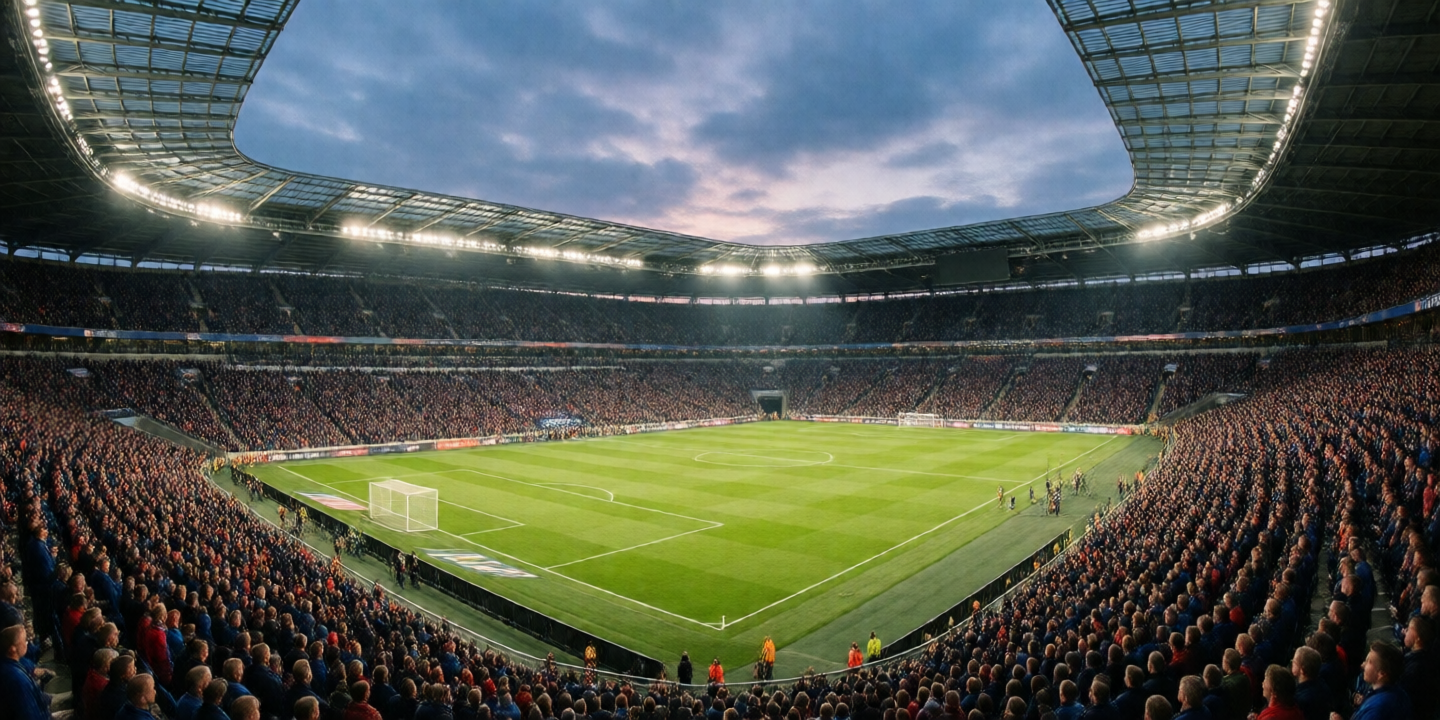
The FIFA World Cup 2026 will be hosted by Canada, Mexico, and the United States, with 48 national teams playing 104 matches across 16 host cities from June 11 to July 19, 2026. Atlanta, Georgia, is one of the tournament’s major venues, and Mercedes-Benz Stadium is scheduled to host eight matches, including a semifinal. The expanded format creates more football, more travel, and more opportunities for bad assumptions about kickoff times, ticket availability, team form, and betting value. Pitch Notes tracks World Cup 2026 fixtures, tactics, player statistics, predictions, and tournament developments for supporters who prefer evidence over patriotic advertising. The practical takeaway is simple: verify FIFA’s official information, map the venue and time zone before committing money, and treat predictions as probability estimates rather than guarantees.

Photo by Chris wade NTEZICIMPA on Pexels
Want the tournament picture before the marketing noise becomes unbearable? Start with the core mistake: assuming that “World Cup football 2026” is simply the 2022 tournament with extra teams. It is not. FIFA has moved from 32 teams to 48, introduced a 104-match schedule, and distributed matches across three countries covering several time zones. That affects qualification paths, squad rotation, ticket demand, transport, recovery periods, and the reliability of early betting markets. Atlanta’s role matters because Mercedes-Benz Stadium is not merely a group-stage stop; it is a semifinal host and one of the most prominent American venues in the competition. The official FIFA World Cup 26 tournament information remains the authority for confirmed fixtures, while the Atlanta World Cup 2026 host-city site provides local planning information. Pitch Notes adds the less glamorous layer: tactical matchups, injuries, expected lineups, and whether a fashionable team is actually priced fairly.
See the tournament details before making your own shortlist.
The Bottom Line
The biggest World Cup Football 2026 mistake is treating popularity as information. The competition’s 48-team format, 16 host cities, and 104 matches require supporters to separate confirmed tournament facts from assumptions about teams, venues, and markets. Atlanta should attract particular attention because Mercedes-Benz Stadium will host eight matches and a semifinal, but a glamorous venue does not make every fixture tactically significant or every favorite worth backing.
What should you do instead? Build your analysis around five verified inputs: the confirmed fixture, the venue, the local kickoff time, each team’s recent competitive performance, and the likely starting lineups. Then check whether the market price reflects those facts or merely reflects the badge on the shirt. A team ranked highly by reputation may still be vulnerable against a compact defensive opponent, particularly after long-haul travel or a short recovery window. The FIFA Council format announcement confirms the scale of the event, but scale alone does not produce an analytical edge.
Mistake 1: Confusing the Host-City Story With Match Quality
Atlanta’s “soccer city of the South” identity is commercially useful, and the city has genuine football credentials through Atlanta United and its supporters. However, emotional atmosphere is not a performance metric. Mercedes-Benz Stadium’s retractable roof, artificial playing surface, capacity, travel links, and crowd profile can influence logistics and matchday experience, but they do not automatically predict goals, possession, or the result.
A common analytical error is to assign extra value to a team because it plays in an energetic stadium. That is especially dangerous in group-stage matches, where coaches may prioritize control over spectacle. Look at pressing intensity, progressive passes, set-piece efficiency, goalkeeper distribution, and the opponent’s response to wide overloads. These details tell you more than a video montage of cheering supporters ever will. The venue still matters, but its value is primarily contextual: travel, climate, surface familiarity, and recovery conditions should modify your view rather than dictate it.
Atlanta World Cup 2026 venue guide
What Players Actually See
Players do not experience the World Cup as a clean television product; they experience it as a sequence of travel legs, recovery sessions, tactical meetings, heat, humidity, media obligations, and changing opposition styles. For FIFA World Cup 2026, the geographic spread from Vancouver to Mexico City and Miami creates a scheduling problem that casual previews often flatten into one generic “home advantage” claim. Atlanta’s climate in June and July may also affect tempo, particularly when a team relies on sustained pressing rather than controlled possession.
The useful question is not, “Which team has the biggest stars?” It is, “Which team can preserve its preferred structure when its best plan is disrupted?” A midfielder who thrives with short distances between defensive and attacking lines may look less effective when fatigue opens gaps. A fullback who dominates at club level may struggle when asked to defend repeated transitions after a long flight. This is where player statistics become practical rather than decorative. Compare minutes played, progressive carrying, duel success, recoveries, non-penalty expected goals, and availability across the previous 12 months. StatsBomb and public FIFA match data can support that process, although no dataset eliminates uncertainty.
I have watched bettors treat a star player’s highlight reel as if it were a medical report. It is not. Before judging a favorite, check whether the player has completed full training, whether the coach has reduced his minutes, and whether the tactical system creates the same chances against stronger opponents.
Get a sharper evidence-based view of the teams and players.
Mistake 2: Ignoring Time Zones and Recovery
The 2026 World Cup spans North American time zones, so a match shown at a convenient evening hour in one country may begin during working hours elsewhere. That matters for supporters planning travel, but it also matters for teams managing sleep, meals, training intensity, and recovery. A match in Atlanta cannot be analyzed independently from where the squad played previously and where it travels next.
Mistake 3: Treating the 48-Team Format Like a 32-Team Tournament
The expanded field changes incentives. More teams qualify from the group stage, and the tournament includes additional matches, creating more opportunities for rotation and cautious game management. A side that would have needed a win under the old structure may accept a draw under the new one, depending on group mathematics and the competition rules confirmed by FIFA.
That changes the interpretation of early match statistics. Low shot volume may indicate poor attacking quality, but it may also indicate two teams protecting a valuable point. Likewise, a late substitution is not always a sign of tactical panic; it may be deliberate load management in a longer tournament. Keep a separate note for the format, group permutations, and tie-break rules rather than relying on memories of Qatar 2022 or Russia 2018. The World Football Elo Ratings can provide a comparative baseline, but ratings do not model every travel and rotation variable.
The 3 Things That Matter Most
The three most important World Cup Football 2026 factors are verified availability, tactical compatibility, and price discipline. Availability identifies who can actually play; tactical compatibility shows whether one team’s strengths attack the other team’s weaknesses; price discipline determines whether a prediction has positive expected value. Remove any one of these, and the analysis becomes a confident story with missing wheels.
- Availability: Confirm injuries, suspensions, training status, and expected minutes through reliable reporting.
- Tactical compatibility: Compare pressing resistance, set-piece defense, transition control, width, and defensive line height.
- Price discipline: Convert the odds into implied probability, account for the bookmaker margin, and decide whether your estimated probability is genuinely higher.
For decimal odds, implied probability is calculated as 1 divided by the quoted odds. Odds of 2.00 imply 50% before accounting for the market margin; odds of 1.50 imply 66.67%. That is not a prediction of what will happen. It is the break-even threshold before variance, commission, and pricing errors are considered. The UK Gambling Commission describes responsible gambling as requiring control over time and money spent, a principle worth applying regardless of jurisdiction.
Mistake 4: Using FIFA Rankings as a Complete Prediction Model
FIFA rankings are useful context, but they are not a full match model. They aggregate results through a rating system; they do not tell you whether a specific opponent can exploit a team’s weak build-up structure or defend its dead-ball routines. A highly ranked team can be a poor favorite when its midfield is depleted, its striker is carrying a knock, or its opponent has a direct tactical counter.
A stronger workflow combines ranking position with recent opponent quality, expected-goals difference, shot locations, set-piece records, and lineup continuity. Avoid tiny samples: three matches can reveal a trend, but they cannot prove a stable team identity. My own rule is to downgrade dramatic conclusions based on fewer than five comparable competitive matches, particularly when the opposition level changes sharply between fixtures.
The contrarian point is uncomfortable but useful: a team’s recent win streak may be less informative than its ability to prevent high-quality chances while trailing. That state-based data reveals whether the side can recover tactically or merely benefits from scoring first.

Photo by https://kaboompics.com/ on Pexels
Mistake 5: Assuming Every Market Offers the Same Information
Match-winner markets are familiar, which is precisely why they attract crowded opinions and efficient pricing. Alternative markets such as totals, both-teams-to-score, cards, corners, or player shots may appear easier, but they carry their own data problems, including lineup uncertainty and provider-specific settlement rules. A price is not valuable because it looks generous; it is valuable only when your probability estimate is more accurate than the market’s.
Track the closing price, not only the result. If you backed a team at 2.40 and it closed at 2.10, the match can still finish badly while your process was sound. Conversely, a winning bet at a poor price does not prove the original reasoning was strong. Over 30 bets, that distinction matters more than one memorable upset. Record the odds, estimated probability, stake, closing line, lineup assumptions, and result in a spreadsheet. Without that audit trail, memory will turn a lucky guess into a fictional system.
Want practical match-reading notes rather than empty certainty?
World Cup match prediction methodology
Edge Cases & Gotchas
Several World Cup Football 2026 details can invalidate an otherwise reasonable preview. The first is late squad news: a confirmed absence can move a market quickly, but not every social-media report deserves immediate reaction. The second is venue uncertainty: FIFA may update match assignments, kickoff times, security instructions, and ticket procedures, so old screenshots are not evidence. The third is settlement language. Different operators may define abandoned matches, player participation, extra time, and postponed fixtures differently.
A practical checklist prevents most avoidable errors:
- Verify the match and kickoff time on FIFA’s official channels.
- Confirm whether the market includes extra time or regulation time only.
- Check the operator’s rules for abandoned or postponed matches.
- Wait for credible lineup information before placing player-specific selections.
- Set a fixed bankroll and stake size before the tournament begins.
- Never chase a loss after an unexpected red card, penalty, or late goal.
Atlanta-specific planning has its own traps. Mercedes-Benz Stadium is downtown, but matchday transit demand can still overwhelm a casual itinerary. Hotel prices, road closures, security screening, and entry windows may change by match. Atlanta World Cup organizers emphasize the city’s culture and hospitality, but supporters should still leave buffer time and use official transport guidance rather than assuming a normal MLS matchday will provide a useful template.
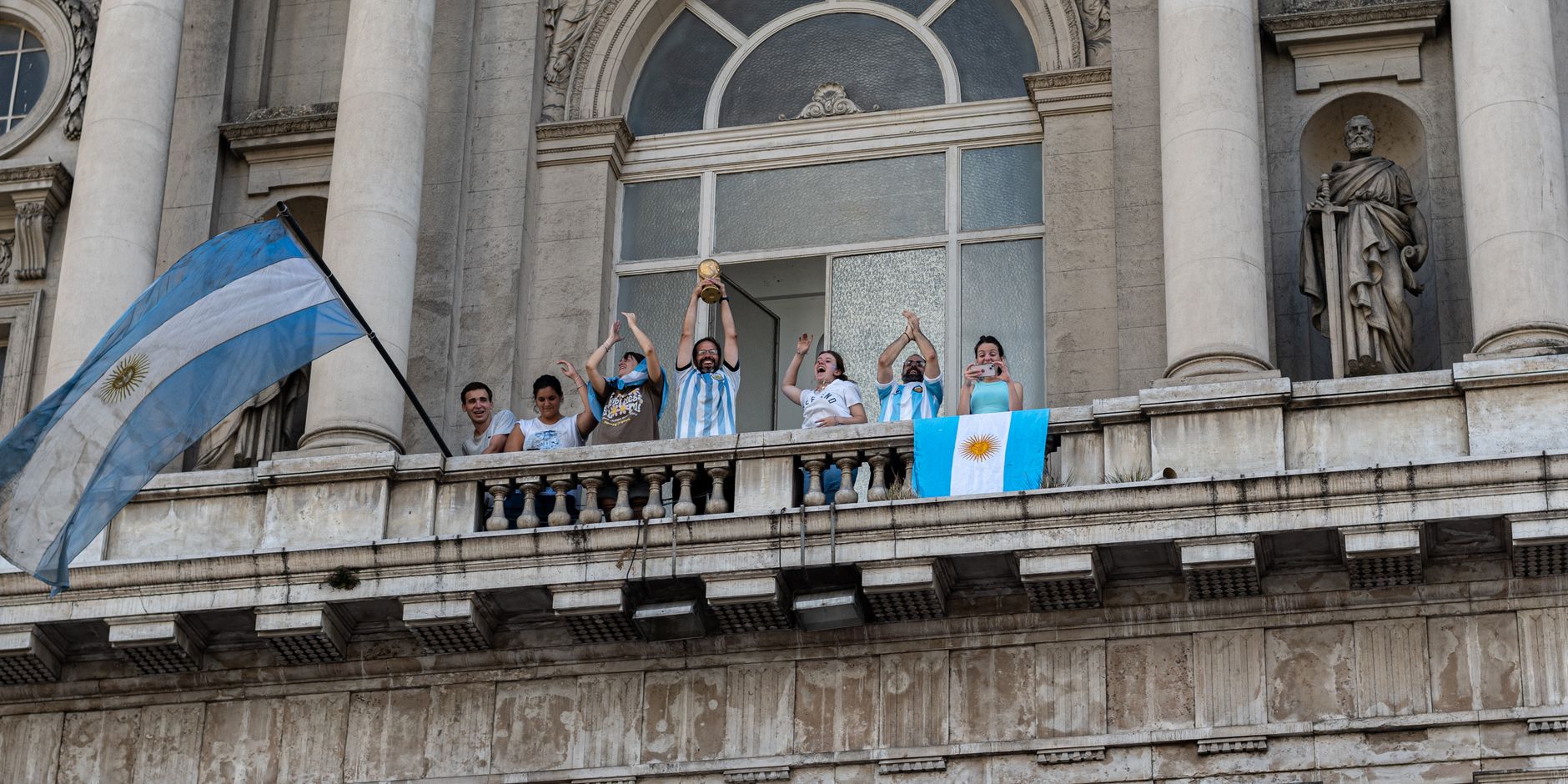
Photo by Fabrizio Velez on Pexels
Mistake 6: Betting Before Lineups, Then Blaming Bad Luck
Early prices can sometimes offer value, but they also contain more uncertainty. If a market opens before confirmed lineups, you are being compensated—or not compensated—for guessing about player availability, tactical changes, and rotation. The sensible response is not to avoid every early market; it is to distinguish information you know from information you are inventing.
For example, a team may normally press high, but its first-choice central midfielder could be absent. That single change can reduce pressing coordination and expose the center backs, yet a basic team-strength model may barely adjust. Conversely, a replacement winger may improve defensive tracking against a dangerous fullback. Player absence is not automatically negative; role fit determines the impact. Pitch Notes’ match previews should therefore be read alongside team news and projected lineups, not treated as a substitute for checking them.
Mistake 7: Confusing Entertainment With a Bankroll Strategy
A World Cup wager should never be confused with a financial plan. Football contains low-scoring variance, referee decisions, deflections, injuries, and penalties, while bookmakers build margin into their prices. Even a genuinely positive expectation can produce a losing run, especially in a short tournament sample. Anyone promising reliable wins is selling confidence, not mathematics.
Use a written limit. A conservative approach might risk 0.5% to 1% of a dedicated bankroll per standard selection, with lower exposure on volatile player and prop markets. Do not borrow money, use essential household funds, or increase stakes to recover losses. “The result is uncertain” is not a disclaimer added for decoration; it is the central fact of football betting. If gambling stops feeling recreational, use local support services and blocking tools immediately.
Verdict
World Cup Football 2026 rewards preparation, not noise. The tournament’s 48 teams, 104 matches, three host countries, and 16 venues create a richer competition but also make lazy analysis easier to expose. Atlanta and Mercedes-Benz Stadium will provide one of the event’s strongest settings, including a semifinal, yet atmosphere should remain context rather than evidence. The best approach is to verify schedules, study tactical matchups, monitor lineups, calculate implied probabilities, track closing prices, and keep entertainment spending separate from essential finances. Pitch Notes can help organize predictions, player statistics, and daily tournament coverage, but no preview can remove uncertainty. Start with the official FIFA schedule, build a match-by-match evidence sheet, and refuse to confuse a compelling narrative with a measurable edge.
Ready to follow the 2026 tournament with a more disciplined process?
Frequently Asked Questions
Q: What is World Cup Football 2026?
A: World Cup Football 2026 is the FIFA men’s tournament hosted by Canada, Mexico, and the United States from June 11 to July 19, 2026. It will feature 48 teams, 104 matches, and 16 host cities, making it the largest edition in tournament history by match count. The competition will combine group-stage football with a knockout phase, so supporters should confirm the exact advancement and tie-break rules through FIFA before relying on old tournament assumptions.
Q: How can I follow World Cup 2026 matches in Atlanta?
A: Follow Atlanta fixtures through FIFA’s official schedule and the Atlanta World Cup 2026 host-city resources. Mercedes-Benz Stadium is scheduled to host eight matches, including a semifinal, but kickoff times, access procedures, transport guidance, and security instructions should be checked close to matchday. Build additional time into your itinerary because downtown traffic, rail demand, screening queues, and event road restrictions can differ substantially from an ordinary Atlanta United fixture.
Q: What is the difference between FIFA rankings and World Cup predictions?
A: FIFA rankings measure broad national-team performance, while World Cup predictions estimate the probability of a specific result under specific conditions. Rankings do not fully account for current injuries, tactical matchups, travel, venue conditions, or expected lineups. A sound prediction combines ranking context with recent competitive data, expected-goals trends, opponent strength, set-piece performance, and the market price being assessed.
Q: Is betting on World Cup Football 2026 worth it?
A: Betting is worth considering only as optional entertainment and only when you understand the probability and financial risks. A market can be mathematically attractive without producing a winning short-term result because football outcomes have substantial variance and bookmakers include a margin. Use a fixed bankroll, modest stakes, licensed operators where legal, and never use borrowed money or essential household funds.
Q: Why does a World Cup prediction fail after a team starts strongly?
A: A prediction can fail because early dominance does not guarantee sustained control, especially after tactical adjustments, fatigue, substitutions, or a red card. Possession may be harmless if it occurs away from the penalty area, while a low-possession opponent may create higher-quality transition chances. Review shot quality, field position, pressing success, lineup changes, and game state before deciding whether the process failed or the outcome was simply unfavorable.
Q: How much should I stake on a 2026 World Cup prediction?
A: A cautious recreational approach is to risk no more than 0.5% to 1% of a dedicated bankroll on a standard selection, with less on volatile player or prop markets. This is not a guarantee or universal rule; personal finances, local law, and risk tolerance come first. Set the amount before the match, record the stake, and never increase it automatically after a loss.
Q: What should I check before placing a World Cup match selection?
A: Check the confirmed fixture, kickoff time, venue, competition rules, expected lineups, injury news, market definition, odds, and your estimated probability. Then compare your probability with the implied probability after considering the bookmaker margin. Finally, confirm the operator’s settlement rules for extra time, postponed matches, abandoned fixtures, and player participation so an avoidable technical misunderstanding does not decide the outcome.
responsible sports betting guide
Thank you for reading.
Pitch Notes · Editorial Archive · 2026