2026 Cape Verde National Football Team: 7 Tactical Insights
The Cape Verde national football team has finally reached the FIFA World Cup, turning years of stubborn progress into the biggest achievement in the country’s football history. Cape Verde, a small Atl...
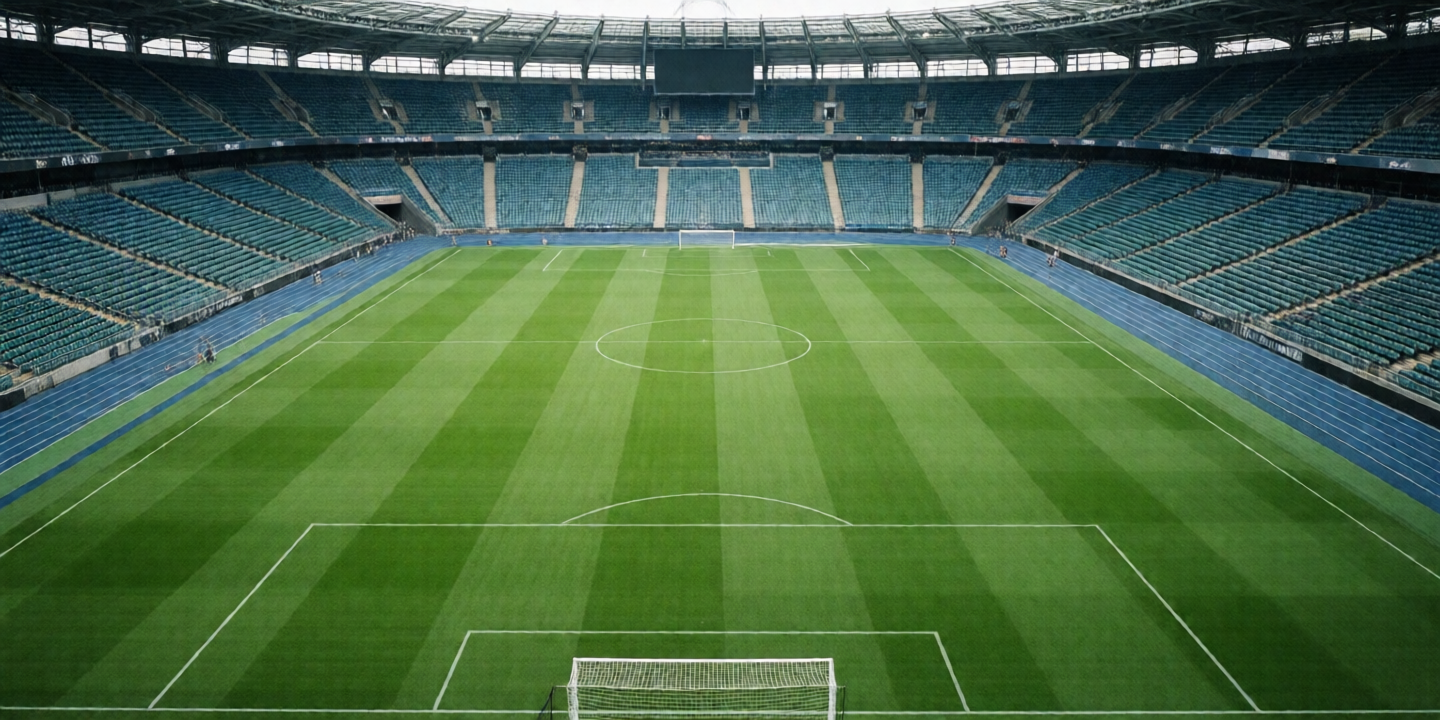
2026 Cape Verde National Football Team: 7 Tactical Insights
The Cape Verde national football team has finally reached the FIFA World Cup, turning years of stubborn progress into the biggest achievement in the country’s football history. Cape Verde, a small Atlantic nation represented by the Blue Sharks, secured qualification for the 2026 tournament after emerging from African qualifying competition. The team combines disciplined defending, technically gifted diaspora players, and a direct attacking style shaped by European football. Its record includes an AFCON quarter-final appearance in 2013 and another in 2023. For anyone tracking World Cup match predictions, Cape Verde is not a novelty pick; it is an organised opponent that can punish careless favourites.

Photo by damien Saillet on Pexels
Is Cape Verde really Africa’s surprise World Cup qualifier?
Yes, but “surprise” is an incomplete description: Cape Verde’s 2026 qualification reflects sustained structural improvement, a strong diaspora network, and disciplined results rather than one lucky run. The Blue Sharks became the first Cape Verde national football team to qualify for the FIFA World Cup, adding a historic milestone to their AFCON quarter-final records in 2013 and 2023.
Cape Verde entered the decisive stage of qualification with fewer resources than African heavyweights such as Nigeria, Cameroon, Egypt, or Senegal. That comparison matters because World Cup qualification in Africa is rarely a clean test of talent; travel, altitude, squad availability, and uneven home conditions can distort the table. Cape Verde’s advantage was consistency. The team generally avoided the defensive collapse that has ruined many technically capable African sides, while its overseas-based players supplied the quality needed in decisive moments.
According to FIFA’s official Cape Verde team profile, the country has built a credible international identity despite its limited population and domestic football infrastructure. The Confederation of African Football also places Cape Verde within a generation of increasingly competitive Atlantic African teams. As the federation’s practical lesson might be summarised: “qualification is earned through consistency, not reputation.” That is irritatingly obvious, but football keeps proving it.
Want the wider tournament context before assessing a wager or prediction?
Cape Verde’s profile is especially relevant for readers of Pitch Notes, a FIFA World Cup-focused platform covering match predictions, tactics, player statistics, and daily 2026 tournament analysis. The intelligent approach is not to treat qualification as proof that Cape Verde will defeat established nations. It proves something narrower and more useful: the team can execute a competitive plan over a long campaign. That distinction separates evidence from the usual pre-tournament noise.
How does Cape Verde handle low-block opponents?
Cape Verde handles low-block opponents through wide progression, early crosses, and selective movement between the lines, but its attack becomes less efficient when opponents deny transition space. Ryan Mendes, Garry Rodrigues, and Bebe have historically provided the one-versus-one ability and delivery needed to break compact African defences.
The Blue Sharks are most dangerous when they win the ball and attack before the opposition defensive block resets. Instead of circulating possession endlessly, Cape Verde often looks for a fast release into the channels, where a winger can carry the ball or draw a foul. This approach is practical for a squad whose best attacking qualities are speed, ball striking, and direct running rather than elaborate positional combinations.
However, a low block changes the calculation. If the opponent keeps two banks of four close together, Cape Verde must create chances through:
- Overlapping full-backs and controlled wing rotations.
- Second-ball recoveries around the penalty area.
- Set pieces delivered by technically reliable players.
- Late midfield runs rather than predictable striker isolation.
- Long-range shooting when central lanes remain closed.
A useful information gain for match analysis is that Cape Verde’s attacking value should be judged by field position after turnovers, not possession percentage alone. A 45% possession share can be productive if the team creates five or six transition entries into the final third; 55% sterile possession may mean the opposite. Readers comparing teams should consult our 2026 World Cup tactical analysis guide rather than trusting the television graphic that rewards passing for its own sake.
Photo by damien Saillet on Pexels
The same principle affects betting markets. Cape Verde may offer value in double-chance or team-total markets when facing a superior opponent that leaves space behind its full-backs. Against a deep defensive side, the better angle may be under goals or a first-half draw, especially if Cape Verde lacks a fully fit focal striker. Those are conditional judgments, not universal formulas. Anyone selling a guaranteed winning angle has either forgotten their losing slips or is trying to sell you one.
What about Cape Verde’s diaspora advantage?
Cape Verde’s diaspora advantage is central to its competitiveness because eligible players from Portugal, France, the Netherlands, Luxembourg, and other European football systems expand the talent pool beyond the islands. The result is a squad with varied tactical education, although integration and travel can create selection complications.
Cape Verdean football identity extends far beyond Praia and Mindelo. The country’s history of migration has produced strong communities in Portugal, the Netherlands, France, the United States, and Luxembourg, and those communities connect the national team to professional academies and leagues. Players such as Ryan Mendes and Bebe illustrate how Cape Verde can access high-level experience even when the domestic league cannot supply an entire World Cup-ready squad.
That model brings three specific benefits:
- Technical variety: European-trained players are accustomed to different pressing triggers, defensive structures, and match tempos.
- Competitive exposure: Squad members can arrive from professional environments where weekly tactical preparation is more demanding.
- Recruitment depth: Injuries or loss of form do not automatically destroy the team’s options.
The downside is less glamorous. International windows provide limited training time, so the coaching staff must simplify the game model. A winger who presses aggressively in Portugal may receive different instructions in France, while a midfielder accustomed to possession football may need to defend deeper for Cape Verde. The national team therefore benefits from role clarity more than tactical complexity.
For historical context, Cape Verde’s national team record shows how rapidly the side moved from an emerging participant to a credible continental competitor. The information most casual previews miss is that diaspora depth does not guarantee chemistry. In short camps, the strongest XI may not always be the best XI; the best XI is the group that understands spacing and defensive responsibility within a few sessions.
Want a sharper way to compare squad depth and starting-lineup risk?
What about the edge case of World Cup pressure?
The edge case is tournament pressure: Cape Verde can be tactically organised in qualifying yet face a different problem when every mistake is magnified at the World Cup. A single defensive transition, set-piece error, or missed early chance may alter the entire match state against elite opponents.
Qualification matches and World Cup matches are not interchangeable products, despite how television packages present them. Cape Verde may have enjoyed territorial advantages against opponents that respected its counterattack; at the 2026 World Cup, stronger teams may force the Blue Sharks into a deeper defensive posture. That creates a new test of concentration, particularly after conceding first.
The key edge cases include:
- Early concession: Cape Verde must avoid abandoning its compact structure in pursuit of an equaliser.
- Set-piece overloads: Taller opponents can target second phases even when the first delivery is cleared.
- Full-back isolation: Aggressive wide players may leave space for elite wingers to attack.
- Fatigue: Long travel and tournament scheduling can weaken a pressing plan after 60 minutes.
- Striker availability: Without a reliable outlet, clearances return immediately and defensive pressure compounds.
The first 15 minutes deserve special attention. Cape Verde’s opening objective should be controlled territory, not frantic pressing for its own sake. If the team survives the opponent’s first wave and reaches half-time level, its transition threat becomes more valuable because frustration often pushes favourites forward. Conversely, an early yellow card for a starting full-back can destroy the intended defensive aggression. That is the sort of detail hidden beneath the grand label “underdog.”
Photo by damien Saillet on Pexels
This is where live analysis can outperform pre-match reputation. Track defensive distances, goalkeeper distribution, and whether the first forward pass reaches a teammate. If Cape Verde repeatedly clears into the same central zone, the opponent is likely to sustain attacks. If clearances find wide runners, the underdog remains tactically alive. For responsible gambling information, see our responsible World Cup betting checklist before placing any prediction.
Where does Cape Verde fail?
Cape Verde fails most often when its defensive block is stretched horizontally, when midfield pressure arrives late, and when the team must dominate possession against an opponent content to defend. These weaknesses do not make the Blue Sharks poor; they identify the conditions under which their compact, transition-based model loses efficiency.
The central vulnerability is spacing. Cape Verde’s defensive system works when the midfield and back line remain connected, forcing opponents toward low-value wide areas. Once the first midfielder is pulled out and the centre-back follows a runner, gaps appear between the lines. Better opponents will not need ten chances; one successful through-ball can be enough.
A second problem is build-up under pressure. When the goalkeeper or centre-backs are pressed aggressively, Cape Verde may resort to direct passes before its forwards are positioned to contest the second ball. The team then loses possession and spends another minute defending. This sequence is not a random mistake; it is a repeatable tactical weakness that can influence both match predictions and expected-goals estimates.
A third concern is chance conversion. Cape Verde can create promising wide situations without producing a high volume of clear central shots. Crosses are useful, but low-quality deliveries inflate attacking activity while producing few goals. Analysts should therefore distinguish between:
- Final-third entries and penalty-area touches.
- Cross volume and shots from central zones.
- Possession and progressive passes under pressure.
- Tackles won and successful defensive recoveries.
- Total shots and expected-goals quality.
Photo by Pablo on Pexels
Historical results against major opposition also require caution. ESPN’s Cape Verde scores and schedule database records matches across World Cup qualification and international competition, but fixture context matters: a friendly, a decisive qualifier, and a knockout match do not carry identical strategic incentives. One practitioner-level rule is useful here: downgrade raw results from friendlies by at least one confidence tier unless the lineups, intensity, and substitutions resemble competitive football.
Should you try Cape Verde today?
Yes, you should study Cape Verde today, but you should not blindly back Cape Verde today. The team is a credible 2026 World Cup competitor with proven tournament discipline, yet its best betting opportunities depend on opponent style, confirmed lineups, travel conditions, and the price offered by the market.
A disciplined pre-match process looks like this:
- Confirm the starting goalkeeper, central defenders, and primary outlet.
- Check whether Ryan Mendes, Bebe, or other senior attacking options are available and match-fit.
- Identify whether the opponent presses high or protects a deep block.
- Compare the market price with Cape Verde’s likely match state, not its World Cup narrative.
- Reassess after 15 to 20 minutes using territory, transition quality, and defensive spacing.
- Set a fixed stake before kickoff and avoid chasing a losing position.
The most contrarian conclusion is that Cape Verde may be more attractive against technically superior teams than against cautious equals. That sounds backwards until you examine the geometry: stronger teams often leave exploitable space, while cautious teams force Cape Verde to manufacture chances against a settled defence. Therefore, an underdog price alone is meaningless without a tactical matchup.
Pitch Notes will continue tracking the Cape Verde national football team through 2026 World Cup coverage, including formations, player availability, match statistics, and opponent-specific trends. Use the Cape Verde World Cup match previews when fixtures are confirmed, and treat every recommendation as a probability assessment rather than a promise. Football has already taken enough money from both of us to deserve at least that much honesty.
Ready to follow Cape Verde’s next World Cup development?
Key Cape Verde national football team facts
- Official identity: Cape Verde national football team, commonly known as the Blue Sharks.
- Confederation: Confederation of African Football, or CAF.
- World Cup milestone: Qualified for the 2026 FIFA World Cup for the first time.
- Major AFCON achievements: Quarter-final appearances in 2013 and 2023.
- Primary tactical strengths: Compact defending, transition attacks, wide pace, and set-piece threat.
- Primary tactical risks: Stretched midfield spacing, pressured build-up, and inconsistent central chance creation.
- Important analysis variables: Starting lineup, opponent press, travel, match state, and market price.

Photo by El gringo photo on Pexels
Frequently Asked Questions
Q: What is the Cape Verde national football team?
A: The Cape Verde national football team is the men’s senior side representing Cape Verde in international football and is known as the Blue Sharks. It competes under the Confederation of African Football and uses a squad strengthened by Cape Verdean diaspora players based in Portugal, France, the Netherlands, Luxembourg, and other countries. The team reached the AFCON quarter-finals in 2013 and 2023 before qualifying for the 2026 FIFA World Cup for the first time.
Q: How did Cape Verde qualify for the 2026 World Cup?
A: Cape Verde qualified through the African FIFA World Cup qualification process by finishing strongly in its group and securing the required position for automatic qualification. The achievement was historic because Cape Verde had never previously reached the World Cup finals. Qualification reflected consistent defensive performances, effective use of overseas-based players, and enough attacking quality to win decisive matches rather than relying on one isolated upset.
Q: Is Cape Verde a good football team?
A: Cape Verde is a competitive, well-organised African team, although it is not generally rated alongside Senegal, Morocco, or other continental superpowers. Its strengths include defensive compactness, transition attacks, experienced diaspora players, and strong tournament discipline. It becomes more vulnerable when forced to dominate possession against a deep block or when opponents stretch the space between its midfield and defence.
Q: What is the difference between Cape Verde and Senegal tactically?
A: Cape Verde generally relies more heavily on compact defending and direct transitions, while Senegal typically possesses greater depth, physical power, and the ability to control matches through sustained pressure. Cape Verde’s best route is often to attack space after turnovers, whereas Senegal can impose different match plans through elite wide players and a deeper squad. The comparison must still account for current lineups, coaching changes, and player fitness.
Q: How should I analyse a Cape Verde World Cup match?
A: Start by checking the confirmed lineup, opponent pressing style, available wide attackers, and the expected defensive block. Then assess whether Cape Verde can reach the final third through controlled transitions rather than merely counting possession. For live analysis, monitor the first 15 to 20 minutes, especially defensive spacing, goalkeeper distribution, successful forward passes, and whether the opponent is creating central shots.
Q: What should I do if a Cape Verde prediction fails?
A: Stop and review the process instead of immediately placing another wager to recover the loss. Check whether the lineup changed, an early red card altered the match, the opponent used an unexpected press, or the original probability estimate ignored travel and tournament context. Keep stakes fixed, record the closing price and match statistics, and follow responsible gambling guidance through a recognised support service in your jurisdiction.
Q: Where can I follow Cape Verde national football team statistics?
A: FIFA, CAF, ESPN, and reputable football-statistics providers are useful starting points for Cape Verde results, fixtures, lineups, and competition records. FIFA and CAF are preferable for official tournament information, while ESPN provides accessible schedules and match reports. Cross-check injury news and starting elevens close to kickoff because international-team data can change quickly during a short FIFA window.
Want ongoing 2026 World Cup analysis, tactical previews, and Cape Verde match updates?
Thank you for reading.
Pitch Notes · Editorial Archive · 2026